The Filipino dining industry is entering one of its most transformative periods in decades. What once defined convenience, menu familiarity, and predictable quick-service routines has evolved into a consumer mindset that prioritizes sophistication, reliability, and experiential value. This evolution is driven by shifting lifestyles, growing culinary curiosity, and an increased emphasis on trust, consistency, and operational discipline.
Across the country, one message has become unmistakable:
good food is expected — well-run brands are admired.
Industry analysts note that operators who fail to align with these evolving standards are increasingly at risk of losing both market share and consumer loyalty.
Post-Pandemic Consumers Demand More Than Transactions
Dining has shifted from a transactional experience to a value-driven, expectation-laden activity. Observations from recent surveys suggest that Filipino consumers increasingly evaluate brands based on the systems, discipline, and consistency behind every service touchpoint.
Key priorities for diners in 2025 include:
- Shorter, predictable wait times — efficiency is no longer optional.
- Consistency across branches — a single negative experience can erode trust.
- Clean, organized, and safe dining environments — operational discipline is visible.
- Menus that balance innovation and familiarity — novelty must not compromise quality.
- Genuine care and service — consumers notice effort, not just efficiency.
Although price sensitivity remains, value is now measured by dependable quality and repeatable excellence, not just cost.
Analysts estimate that the quick-service and casual dining segments are experiencing double-digit growth annually, driven by consumers who prioritize these operational and experiential benchmarks.
Multicultural Dining Moves Into the Mainstream
What was once considered niche or “adventurous” has become a core expectation in Filipino dining. Japanese takoyaki, Thai flavors, and American-style snacks now appear regularly in households and social dining routines. Filipino comfort food continues to anchor family meals, yet diners are increasingly seeking diversity without compromise on consistency.
Industry insights indicate that brands offering multicultural menus while maintaining strict quality standards see higher repeat visits and stronger word-of-mouth adoption.
Diners now approach new concepts with the same expectations they have for established brands, raising the competitive bar across the sector.
Operational Excellence as a Market Differentiator
Research consistently shows that the most successful brands combine culinary quality with operational rigor. Operational excellence has become a key determinant of brand resilience and growth.
Effective systems typically include:
- Food safety protocols — critical for consumer trust.
- Standardized training programs — ensuring uniformity across locations.
- Service consistency — staff adherence to operational SOPs.
- Quality control systems — monitoring both products and processes.
- Structured management oversight — aligning execution with brand standards.
Companies investing in disciplined systems and people development outperform less structured competitors.
Consumers Expect Purpose Beyond the Plate
A rising expectation among Filipino diners is that brands demonstrate purpose through operational excellence and cultural integrity, not just marketing messaging. Consumers are increasingly assessing:
- Care for employees — turnover and training systems reflect organizational health.
- Transparency in sourcing — ethical and traceable supply chains build credibility.
- Community impact — brands integrated into local culture earn long-term loyalty.
- Mission-aligned decision-making — guiding operations beyond profit alone.
Purpose-driven companies are not only preferred by diners; they are admired by industry peers and potential franchise partners, strengthening both market influence and organizational reputation.
The New Competitive Advantage: Multi-Brand Ecosystems
With consumers seeking variety, convenience, and consistent quality, multi-brand groups are uniquely positioned to lead the next phase of industry growth.
A unified ecosystem enables:
- Cross-trained teams — staff versatility across concepts improves efficiency.
- Consolidated quality standards — uniform experience across all brands.
- Centralized food safety oversight — compliance and consistency at scale.
- Faster innovation cycles — learnings from one brand accelerate others.
- Scalable operational systems — enabling expansion without quality compromise.
It is no longer enough to excel in just one category. The brands that thrive will be those offering diverse experiences, supported by one shared commitment.
We aim to be a company that inspires admiration when it comes to excellence, quality and speed — not just for the food we serve, but for how we operate, lead, and care for our people. Our employees are the heart of everything we do.
– Noel Andres, CEO of Nego Food Solution Food Corp.
Looking Ahead — 2025 and Beyond
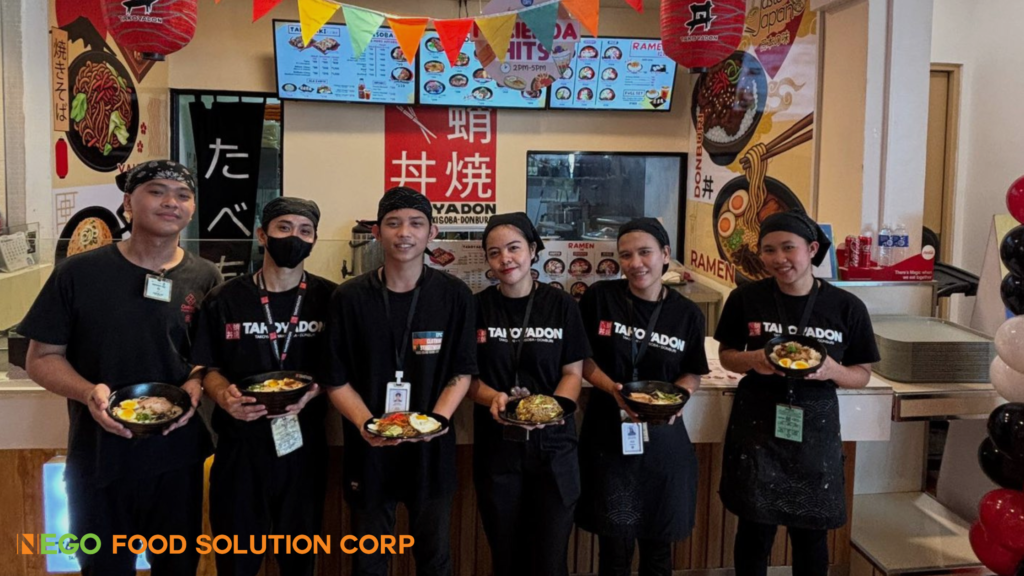
The Filipino dining industry is being reshaped by defining forces: innovation, excellence, cultural diversity, and operational purpose. These are not fleeting trends; they are long-term expectations that will separate leaders from laggards.
The companies positioned to lead the next decade are those that:
- Maintain rigorous operational standards across all locations.
- Anticipate and respond to evolving consumer expectations.
- Invest in training programs and team growth.
- Operate with discipline, integrity, and purpose.
- Manage multiple concepts under a unified philosophy of excellence.
Analysts predict that brands integrating these four forces are most likely to achieve sustained growth, higher consumer loyalty, and stronger franchise interest over the next five years.
Filipino dining is entering its most exciting era yet, and Nego Food Solution Food Corp. is driving this transformation: setting new standards for excellence and building brands that are admired by customers, partners, and employees alike.